loisaida street art

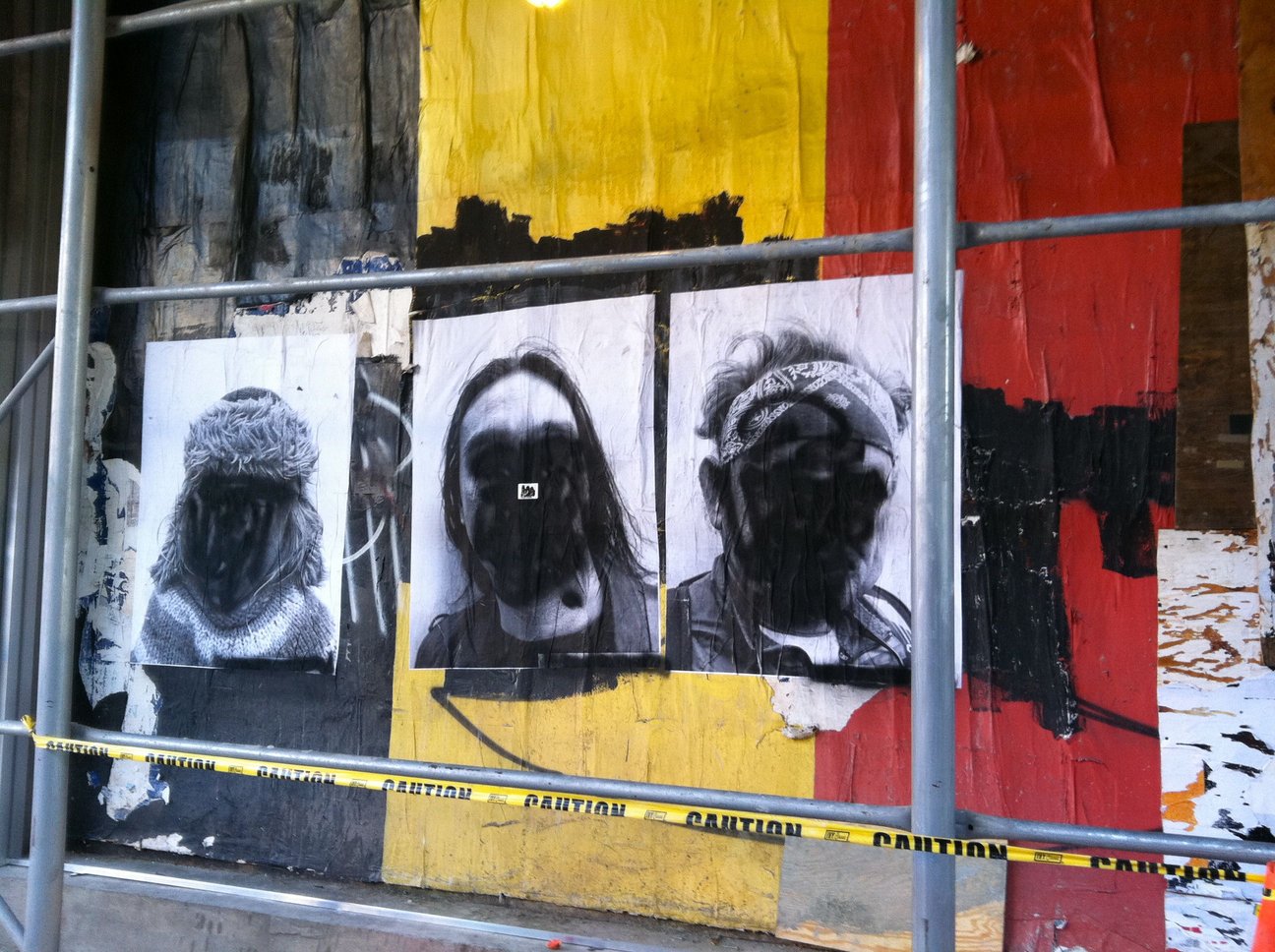
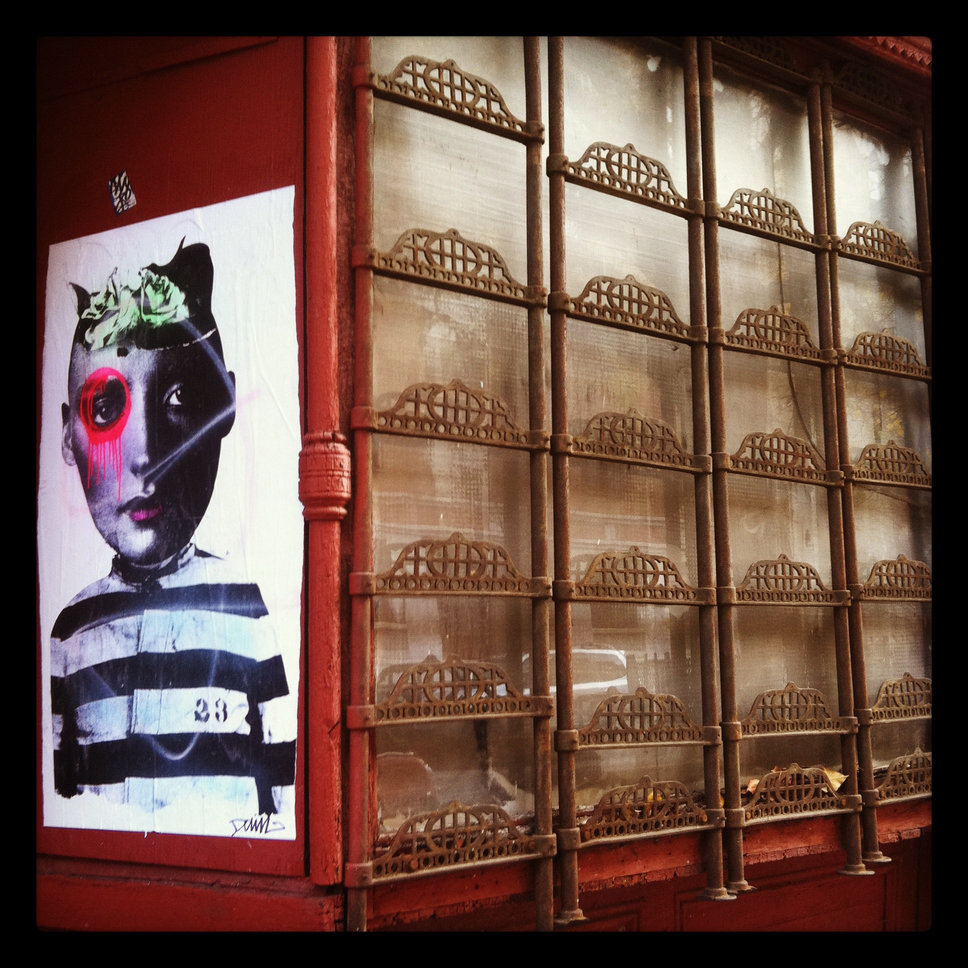
When I made wheat paste glue from scratch last week to make venetian plaster, I was reminded of the street posters that were the way that local artists and musicians advertised before email became the norm. Friends would call for assistance and we would hit the streets at night armed with posters,  a bucket of wheat paste and a brush. We called it scumming. The messages change but the street poster will never die.

Posters recently seen in Loisaida, New York.

stucco veneziano part one

We’re going bold and complimentary to the brick with a teal venetian plaster. I love to create and apply the plaster. The art is ancient, from before the Romans, who as usual, copied it from the Greeks. The mixing is time consuming and meditative. I mix the plaster by hand in the same bucket I was given as an apprentice when we first stucco’d our building’s hallways in the early 1990’s. I’ve kept that stucco bucket all these years and I carefully scrap and clean it and put it away after each use. It is stained with the patina of all the colors I’ve ever mixed in it starting with the first butter yellow of our hallways.

I don’t know where this recipe originated. I’m sure that if venetian plaster artisans ever saw  it, they would either snicker or groan. The ancient recipes include lime and marble dust. This is the recipe that was taught me so that I could help do our building’s hallways and it is the recipe that I have always used. It works, it holds up. The hallway stucco is twenty years old and it has only been refreshed once.

stucco veneziano in our hallway 1996

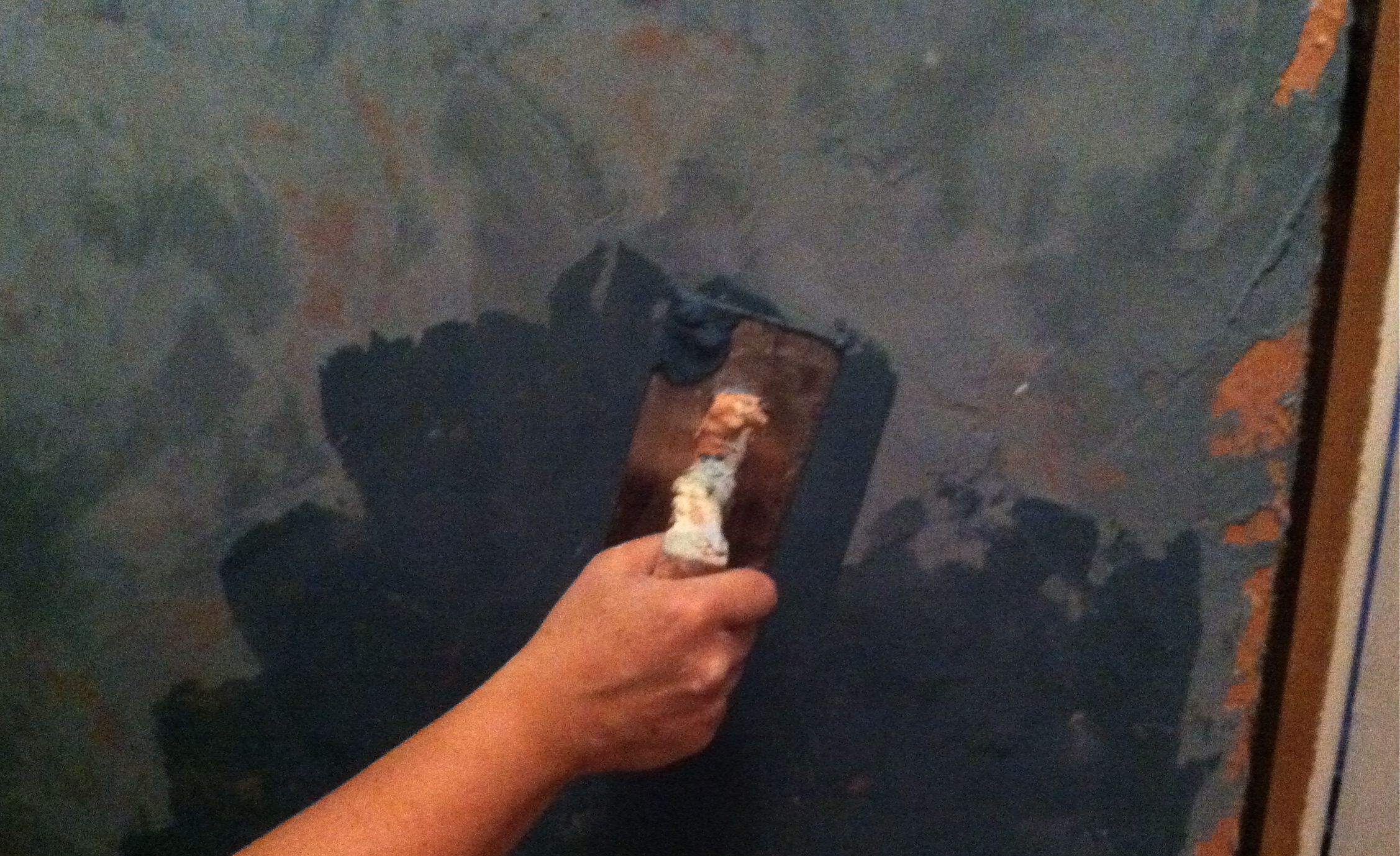
Here is the recipe: Mix 1 part flat paint and 1 part water. Add a dollop of wallpaper paste (the natural kind, called wheat paste). Mix in plaster of paris little by little as if you were mixing cake batter till smooth. Finish by adding a splash of milk to keep the plaster from hardening too quickly. Only mix a little at a time at first till you get the hang of the time it takes to harden and how fast you can get it up. Use a real stucco knife imported from Italy. You will not be able to get it smooth enough with any other tool. If you want to repost this recipe, please link back to this post. 

It’s really hard to find the old-fashioned wallpaper paste that was made out of wheat. Now what they sell is full of chemicals. I had to make my own. I found this recipe. It was very easy and it is a good recipe to have if you ever need to make papier mache.

adding the plaster to the paint mixture

it feels like a cake batter

add a splash of milk to keep it from hardening too quickly

applying the plaster with a stucco knife

Next up will be the finishing touches and the “after photos”. Stay tuned.

lights and action

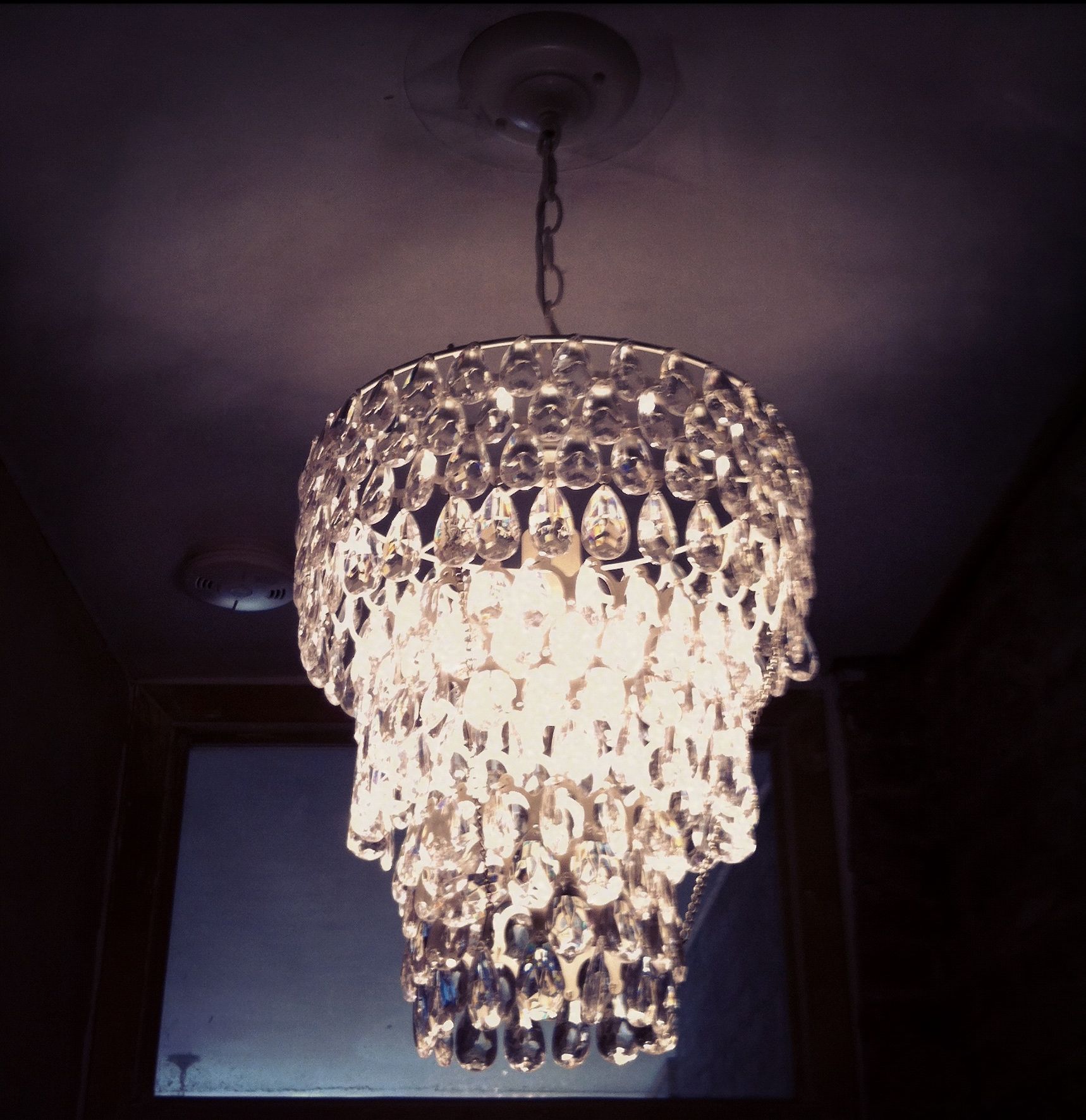
There is movement and decisiveness in the entryway re-do. The teardrop chandelier has been installed. The sleek and skinny glass table from Crate and Barrel has been delivered. The wall opposite the brick will be a rich deep blue stucco veneziano. I will experiment with mixing in mica flakes for a subtle shimmer to catch the light.

teardrop chandelier

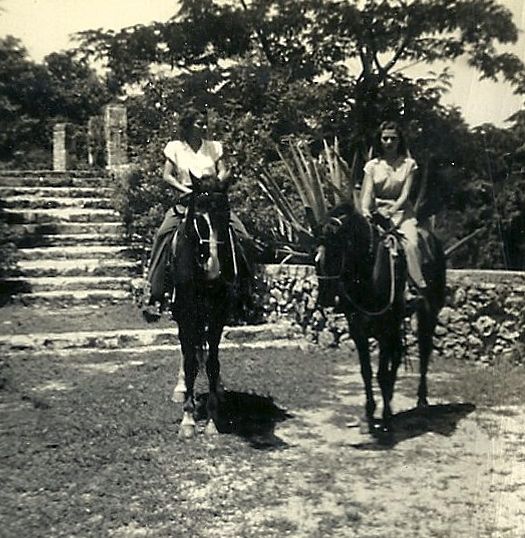
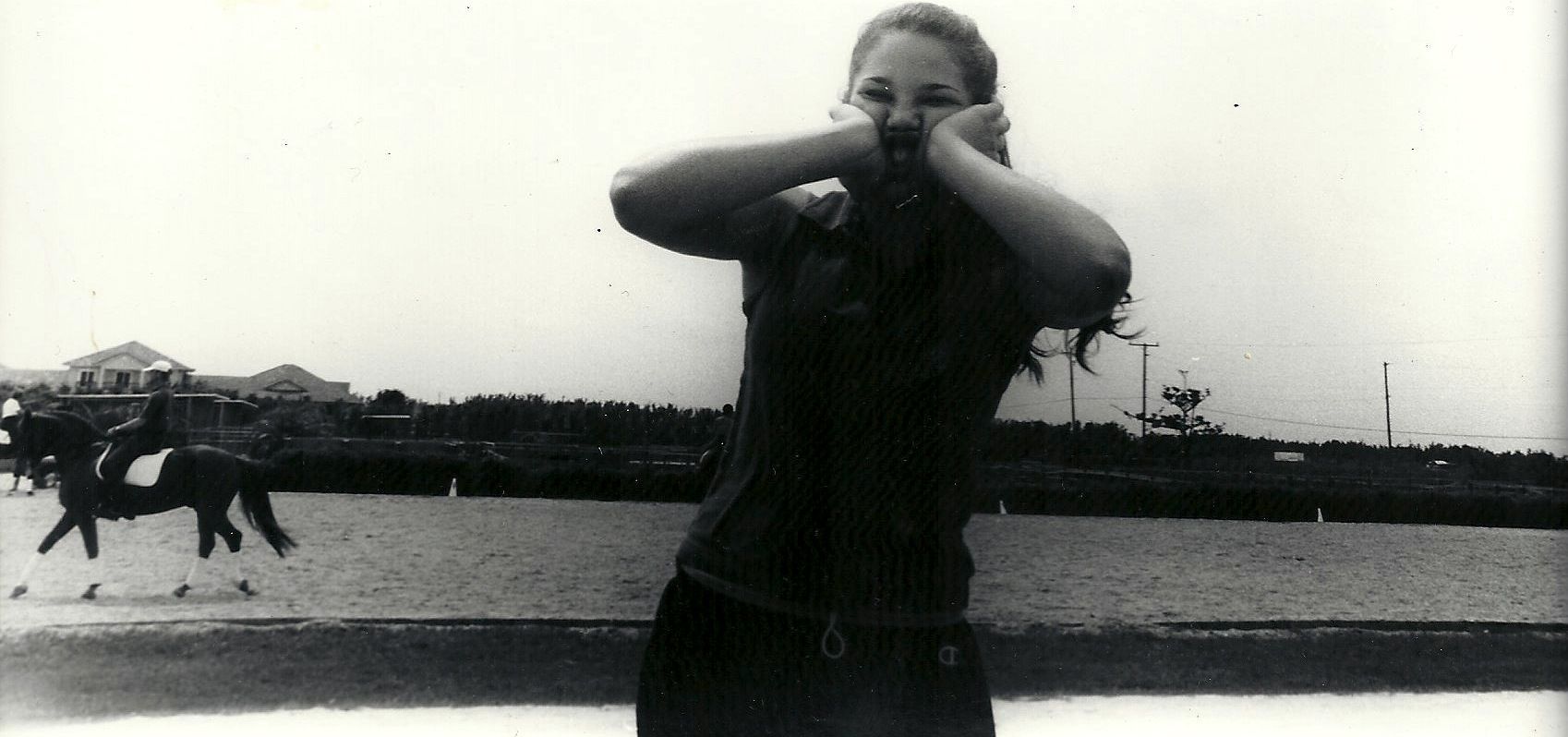
The stars of the entryway will be the wall of family photographs. Here are two that I’ve picked out for framing. The grandmother (left) as a teenager riding with her cousin in El Bosque de la Habana.  Below, the grandaughter makes the funny face that would send her beloved abuela into peels of laughter every time.

knits for winter bike riding

I started commuting by bike only last spring. With the MTA monthly pass going up to over $100, and lots of new bike lanes to make it safer to ride in a crowded city, the decision was made. I walked over to Recycle-A-Bicycle on Loisaida Avenue and bought myself a beautiful recycled purple Schwinn for the price of two monthly passes.

Now I dread when it’s raining and I have to ride the crowded and lumbering crosstown bus to work. I’ve been riding all winter and have knit some accessories to keep me warm.

Taking the advice of For the Love of Bikes blogger Vanessa Marie Robinson in this post, I made myself a big enough cowl to cover my face in the wind and a wool headband to use under my vented helmet.

Here is the extremely simple pattern for the extra long cowl:

2 skeins of Malabrigo Merino Worsted
Cast on 72 stitches on US 9 – 5.5mm 16 inch circular needles
Join the stitches and knit 4 rows then purl 4 rows until you use up the 2 skeins. That’s it.

O is the model. The cowl is Malabrigo Merino Worsted in Frank Ochre

I adapted the very popular Calorimetry pattern at Knitty.com for a narrower headband. I used Noro Kureyon (which I encourage you to buy at your local yarn store). You can make two headbands from one skein.

Noro Kureyon yarn. Sheep stitch markers and rosewood needles from Lantern Moon

Calorimetry headbands in Noro Kureyon yarn with seashell buttons

Here is how I adapted the pattern for the Calorimetry headband:

Instead of casting on 120 stitches, I cast on 80
On Row 5, instead of repeating that row 15 times, I repeated it 8 times.
On Row 7, I just repeated that row till there were no more stitches left outside the markers.

Calorimetry headband fits perfectly under a vented helmet and covers your ears

choosing paint colors with apps

I’ve turned to technology in my quest for the right entryway color. We are going to go bold and if you remember from this post, O wanted a citron color for the wall. I got Keith’s two cents – he votes for a primary red wall in high gloss. Mrs. Limestone, design maven from the Brooklyn Limestone blog, kindly emailed me with the idea of going with a dark color and using the citron as an accent color for the door moldings. I wanted to visualize the different scenarios before committing, so I pulled out my phone.

Top from left: before photo, citron, vermillion. Bottom from left: chartreause, seaweed, tucson teal

I’m using the Benjamin Moore Color Capture app as the jump off. You can take a photo of anything. Say, you are walking down the street and see a poster with a color you love – you snap and capture it. Then you can move your finger over the photo and the colors in it will translate into Benjamin Moore paint colors. When you like a color, you tap it twice and it will save as a “combo” along with the source photo. You can always return to the source photo and save even more colors to the combo. You can also search a color wheel. Now, this doesn’t mean that you can just have someone pick up that can of color from the store on the way home. Easy, but not that easy. You are looking at a digital version of paint so that the color chip will not be an exact match. You still have to go to the paint store and look at paper chips to find the right color.

Next, I wanted to see what the colors would look like against the brick wall so I researched apps for that and found Paint Tester. Not only was it simple to use, it was really fun. You take a photo of the room you want to paint. You choose a color from their grid or you can choose a color from another source such as your photo library. In my case I painted with the Benjamin Moore colors that I’d saved in my library from my combos. Once you’ve chosen the paint color, you pick whether you want to paint with a bucket for large swaths or a brush. Pick the brush. You can adjust the size of the brush. Pick a small brush. Then you tap on the screen and cover the wall with little squares of paint color. You can enlarge your photo to help you stay neat as you tap away. You can also clean up paint jobs with an eraser.

What do you think, shall we go with the citron, the red? Something else?

just tap the paint color into your photo

go bold or go home

I started repainting the apartment last winter and in the typical fashion of a color coward, I kept choosing light colors because it is a small apartment. They say light reflects light and light colors will make the room feel bigger. So that’s what I do. O. says the house looks like a baby nursery gone wrong.

I’ve decided to shed my in-the-box thinking about light colors and go bold – beginning with the entryway. O. likes the idea of a citron color to greet our visitors and I’ve always liked the color of the inside of butternut squash. These colors in venetian plaster would look vibrant and alive, the opposite of the muddy color I attempted before (seen in this post -and here is the before before photo of the entryway). I am still enamored of the idea of adding big molding to the two doors in the hallway. But what color should the molding be? The opposite exposed brick wall will be filled with family photographs all in black frames. Should the moulding be black, white, grey or something else? And what about the metal door that leads outside, that is visible from the living room,  what color should that be? These are questions, which I hope you; my designy friends can help me with by leaving your comments and valuable two cents.

my favorite yellowish citron is Frank Ochre from Malabrigo Yarns

bring on the teenagers

I actually started working on the entryway over the holiday break. It did not work out. I’m insecure about choosing paint colors. I pick colors based on nebulous notions that I think are valid at the time. A friend suggested that in order to tie the hallway together and make it warm and inviting I should pull a color from the exposed brick wall and carry it through to the other wall. I saw it in my head and it made perfect sense. I loved the idea, especially the part where she said I should add beautiful moulding to the doors and paint them a super shiny white. It all sounded so fancy and posh. I carefully photographed the brick wall using my Benjamin Moore Color Capture app and I poured over paint chips so I would get exactly the right color to pull the hallway together. Over two days, I stucco’d the hallway in that lucious earthy color. When I was finished, I tried to talk myself into liking it. I wanted to like it because I liked the idea of it. I wanted the entryway to look warm and posh and pulled together. But it did not look good, and there was no more denying it when my daughter said “Mom, it looks like the before picture”.

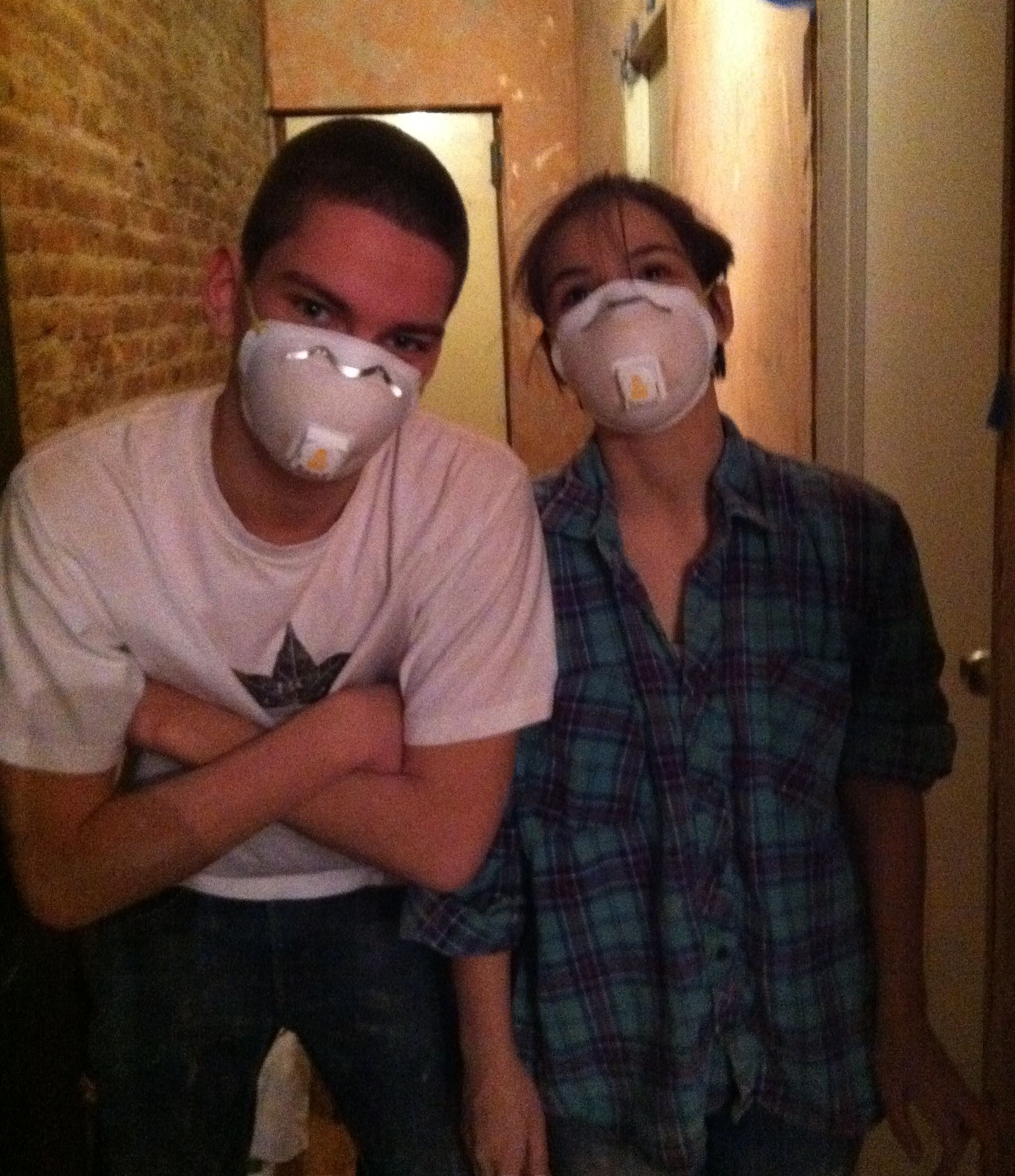
In order to redo stucco over top of stucco, you have to sand it with a machine. It is a messy dusty job that I was putting off doing. Then I thought of the teenagers – why not pay them to do it? With so many adults looking for work, after school jobs are a rarity. Teenagers are expensive beings that eat a lot and go to the movies in packs. It’s near impossible to get your own to do anything, but other people’s teenagers are game. Thus my daughter’s friend Will happily stepped up to the plate with the promise of some spending money and lunch.

Will's mom even sent over homemade cookies!

venetian plaster in my hallway

The hallways in our building are welcoming and warm. The walls are butter yellow venetian plaster and we have bluish grey apartment doors. When we were rebuilding, one of my fellow homesteaders made apprentices of a few of us and taught us the ancient technique of venetian plaster so that we could help her to do the hallways. She called it Stucco Veneziano and gave us all “stucco knives” imported from Italy. We “stucco’ed” all six stories of our building’s halls in this happy yellow. Our hallway stucco is 20 years old and it looks new. We’ve only refreshed it once in all that time. I will use Stucco Veneziano in my own entryway and share the plaster recipe that you can make yourself.
doorways and fresh starts

The entryway is your first impression. It should smell good when you open the door. That will be what people notice first. The entryway should be friendly and welcoming. When someone walks in, they should feel that it is a respite from the outdoors. It should feel warm and cozy when it is cold outside and cool and refreshing when it is hot. There should be a feeling of refuge as you enter, of peace and love and home.

Our entryway is the next thing to tackle in the apartment. It has been a disaster for years. The very opposite of refuge, it is a cluttered and claustrophobic space. With the New Year, it feels like a good place to make the mark for a fresh start.

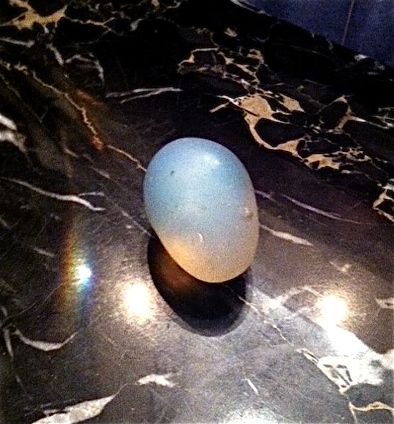
My favorite entryway is my friend Anne’s. There is wallpaper in cobalt blue with a big painterly white pattern. There are framed pencil and charcoal drawings on the walls along with black and white photographs of the family. On her little table where she puts her mail and her keys, there is a bowl of opalescent stones that she got in Chinatown. They are as big as eggs and they are luminous. They call out for you to touch them, smooth them around in your hand like a worry bead as you look over your mail. I am going to copy Anne and find those opal eggs in Chinatown.

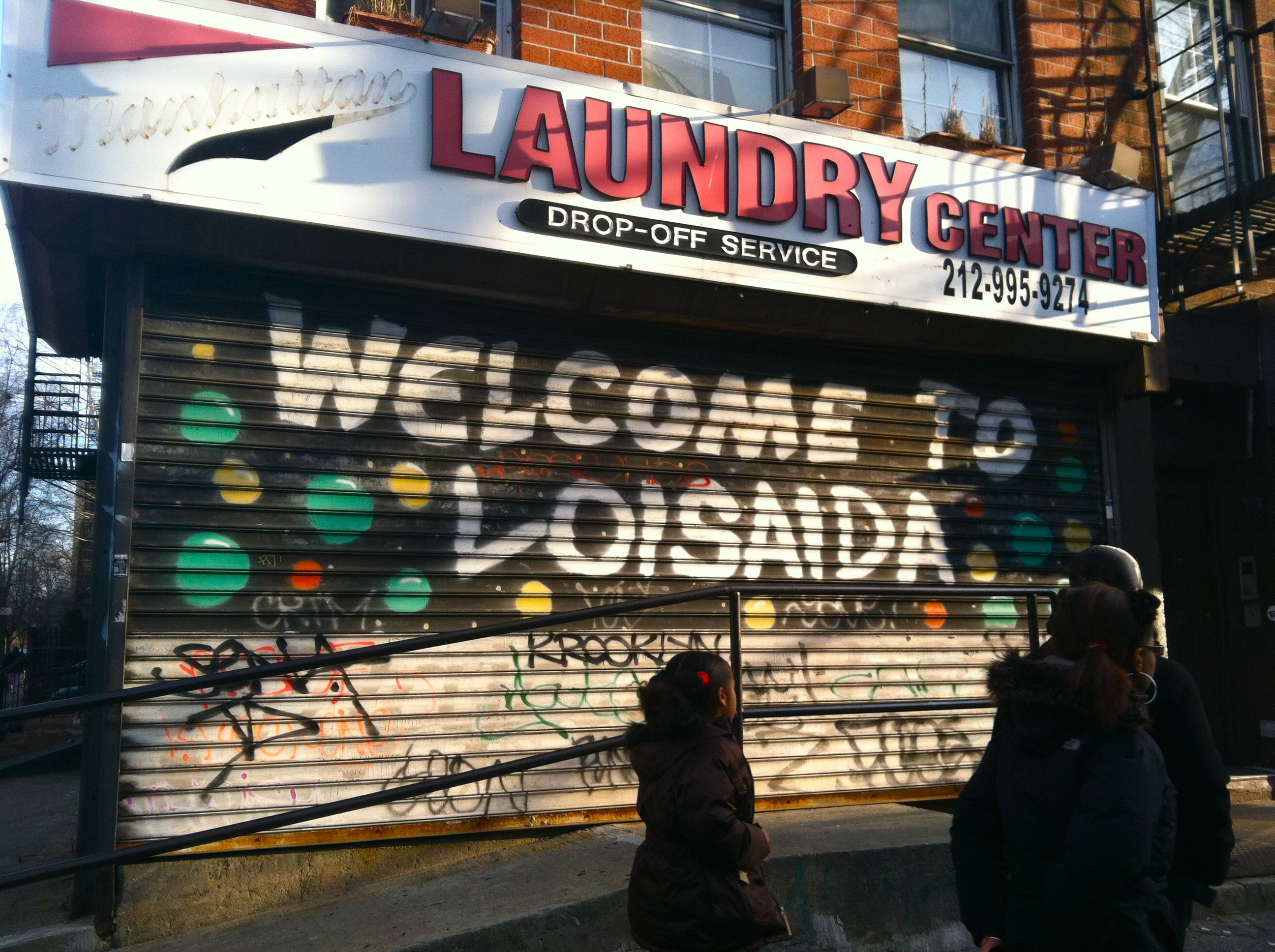
the storefront gate murals of loisaida

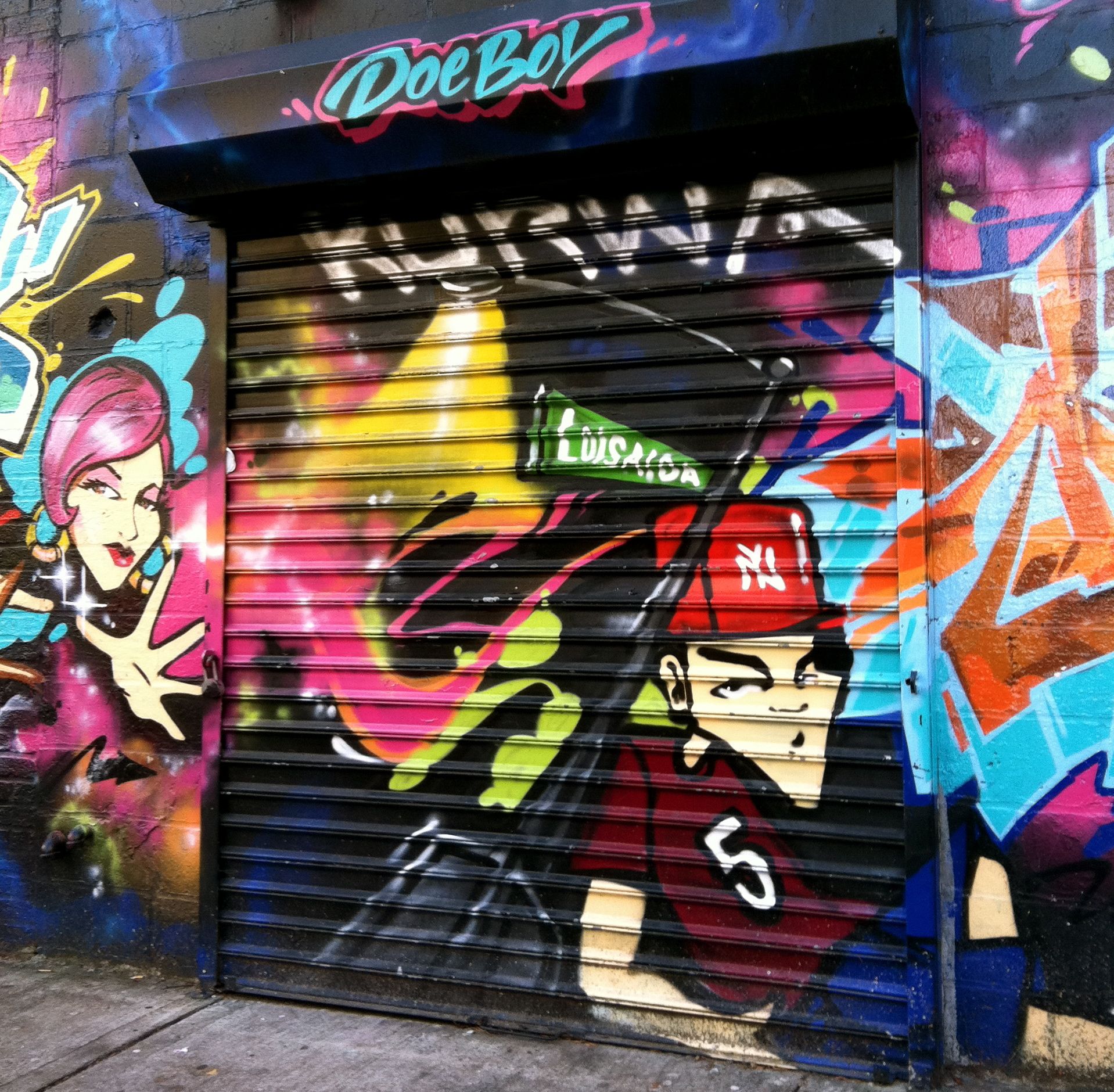
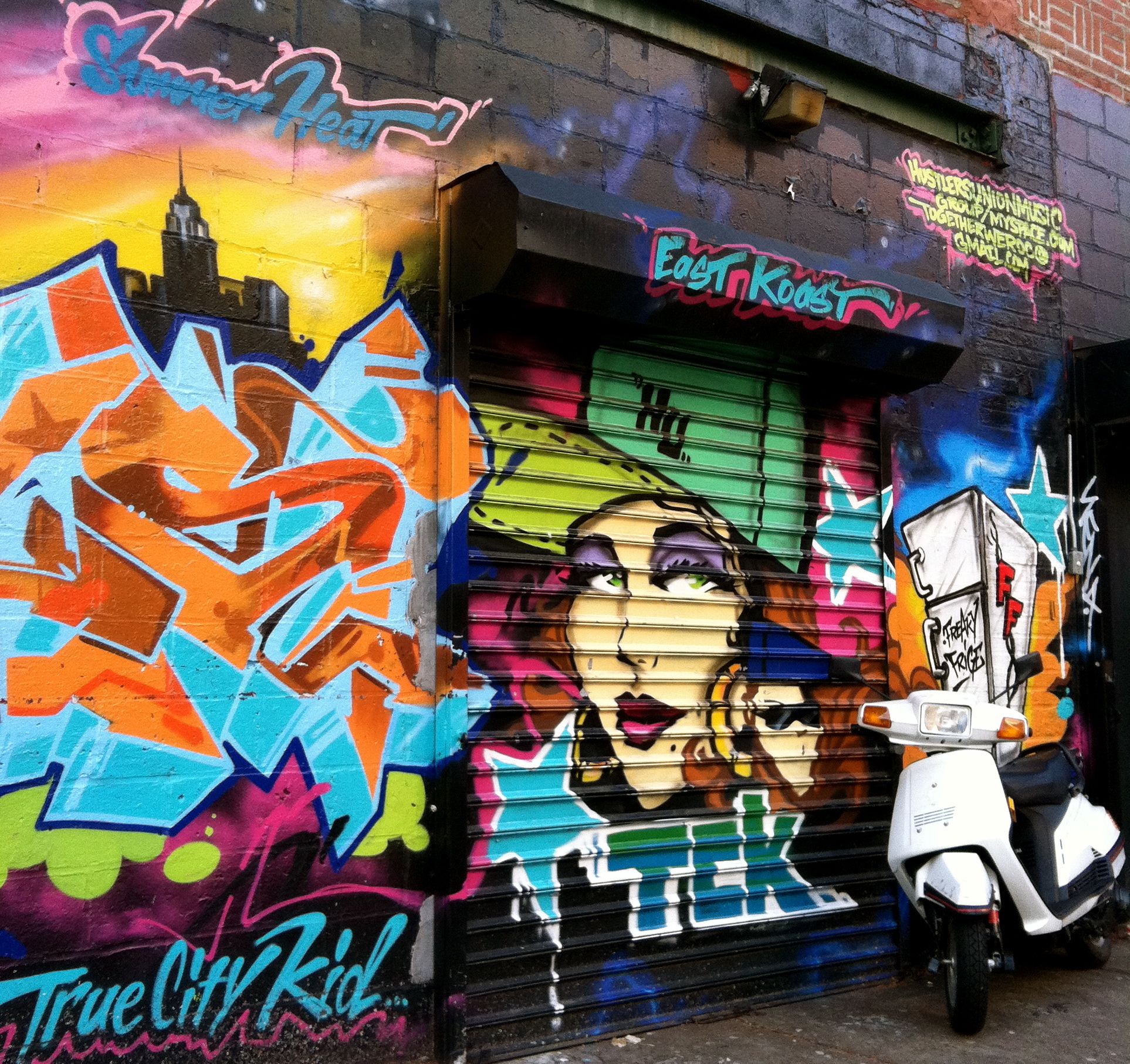
In late 2009 the New York City Council voted to phase out the metal roll-down gates that cover storefronts all over New York City in favor of the gates that you see covering the storefronts inside malls. They say the roll-down gates invite graffitti and are “scary”. Not surprising, the “mall-ification” of New York City continues. We have many storefront gate murals in Loisaida. Luckily we have until 2026 until they are all gone.

5C Cafe

5C Cultural Center and Cafe

loisaida gate

Big Doves Blogspot.com

children of loisaida

Summit Bar gate

Much of the public art in the community is created by Antonio Garcia, the artist known as Chico. The Summit Bar gate before the cocktail hour.

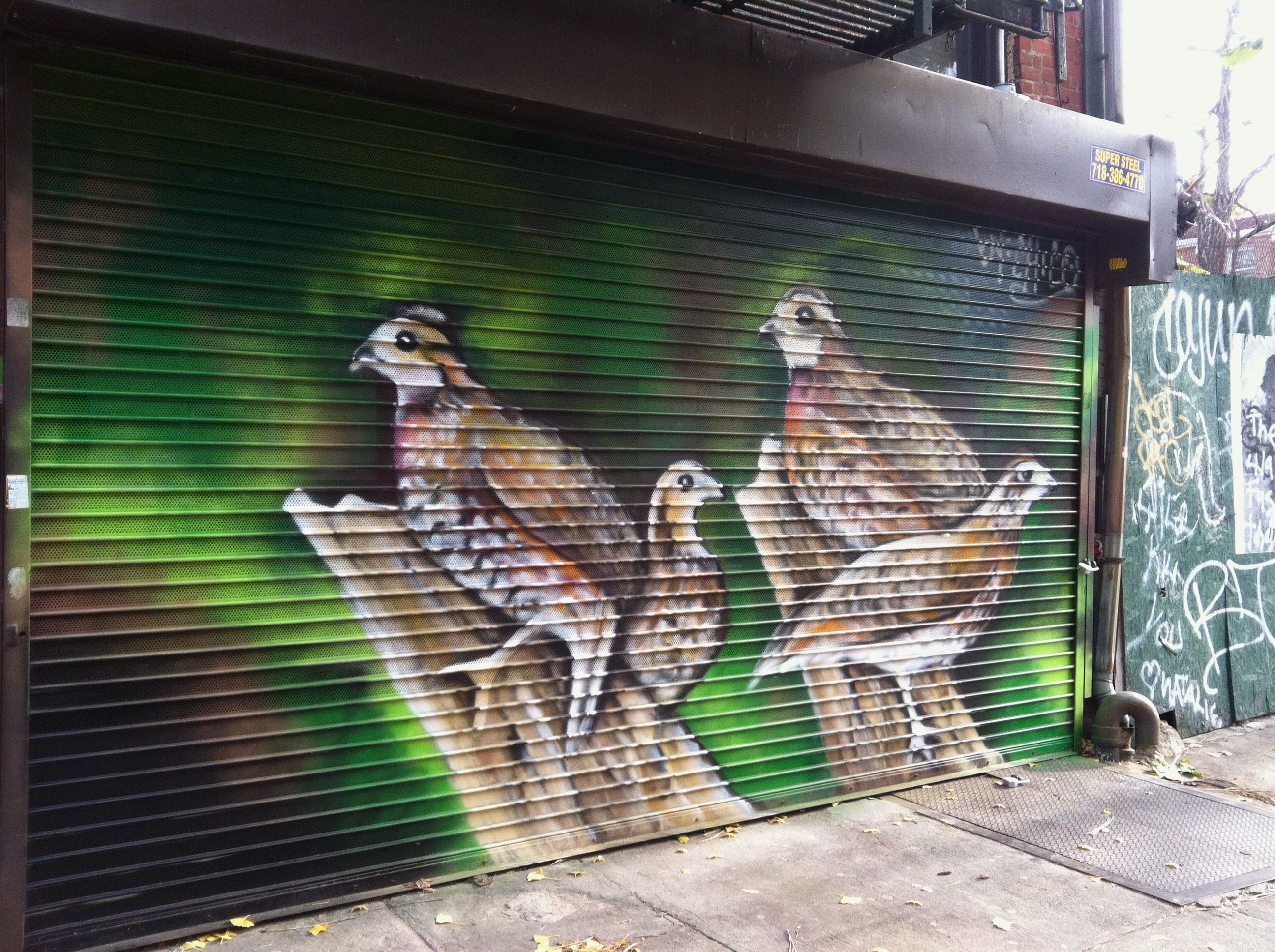
brand new bobwhites

New restaurant Bobwhite Counter commissioned their gate way before they opened.

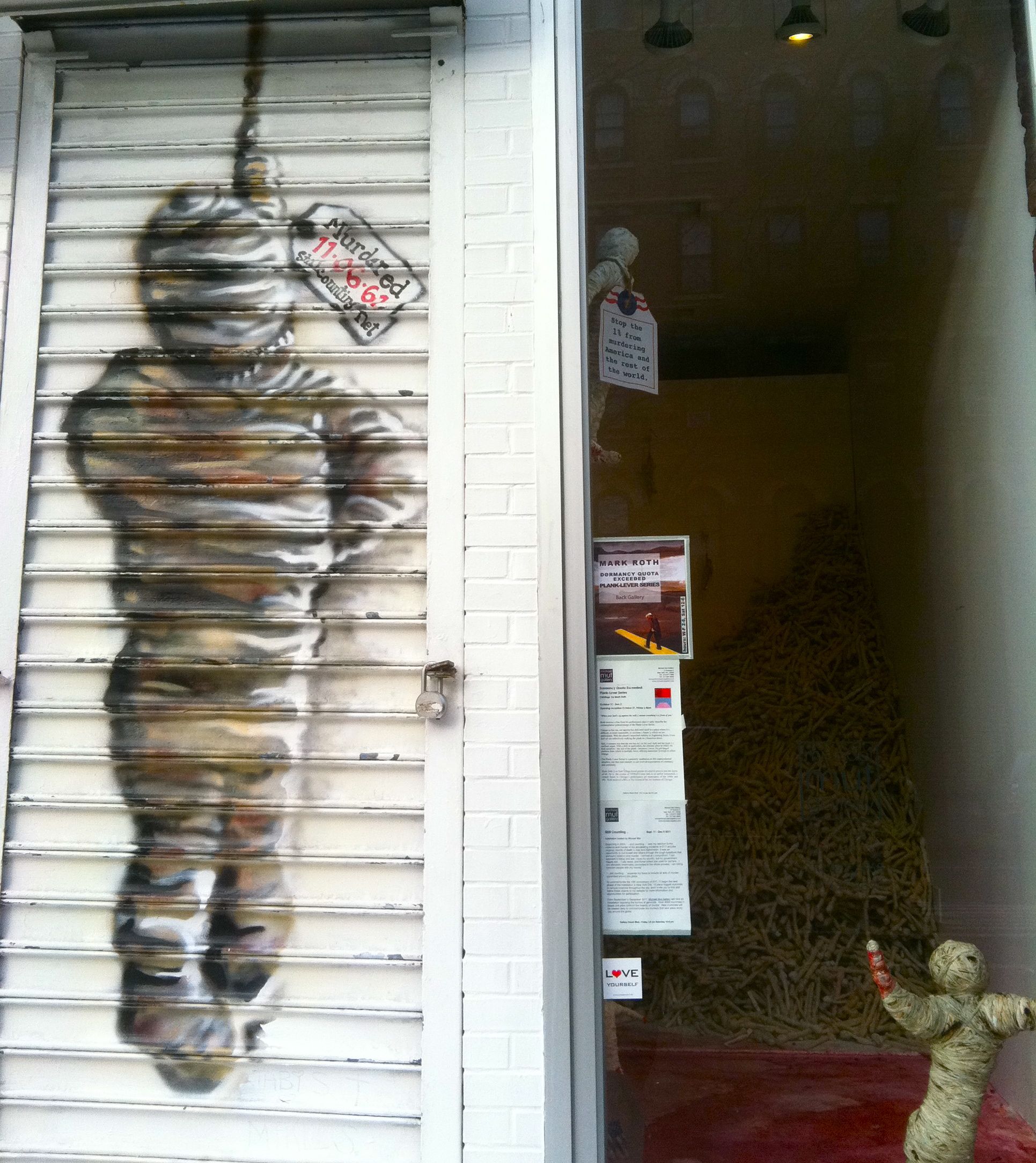
Mut Gallery’s gate mural.