chalk 2014 – remembering the victims of the triangle factory fire

This is the second year that I’ve “chalked” as a remembrance of the victims of the Triangle Shirtwaist Factory Fire. On March 25th in 1911, one hundred and forty six young workers, mostly immigrant young women and girls lost their lives in a horrific fire stoked in greed that galvanized a movement for the safety of workers.

For the past ten years, artist Ruth Sergel has organized CHALK, a memorial project where volunteers  “chalk” the names and ages of the victims on the sidewalks in front of their former homes.  The colorful chalk memorials are a beautiful and bright tribute to the young women at the place where they lived, laughed and dreamed. The chalk memorials are numerous in our historical neighborhood of immigrants. They are on every block. It is heartbreaking to see so many of them.

This year, I felt honored that my friend Rita Bobry, the proprietor of my neighborhood yarn store Downtown Yarns asked me to accompany her to chalk the memorial of her great-aunt who perished in the fire at age twenty-one. Her grandmother’s oldest sibling Necha Dryansky had immigrated from Poland and arrived in New York City alone at the age of sixteen. Like so many others, both then and now, she worked to support her family in the old country. Necha lived with a relative on the Lower East Side  and sent for her next youngest sister Sarah, who arrived in New York as a teenager just six months before her sister died in the factory fire.

Necha Dryansky

Necha Dryansky

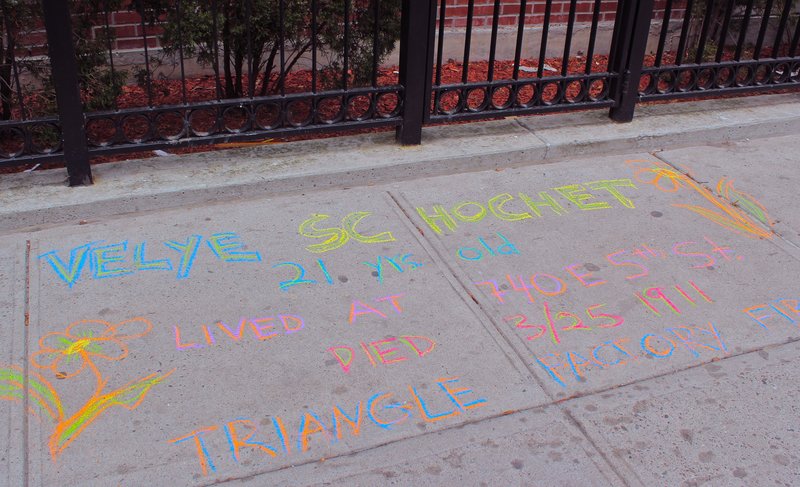
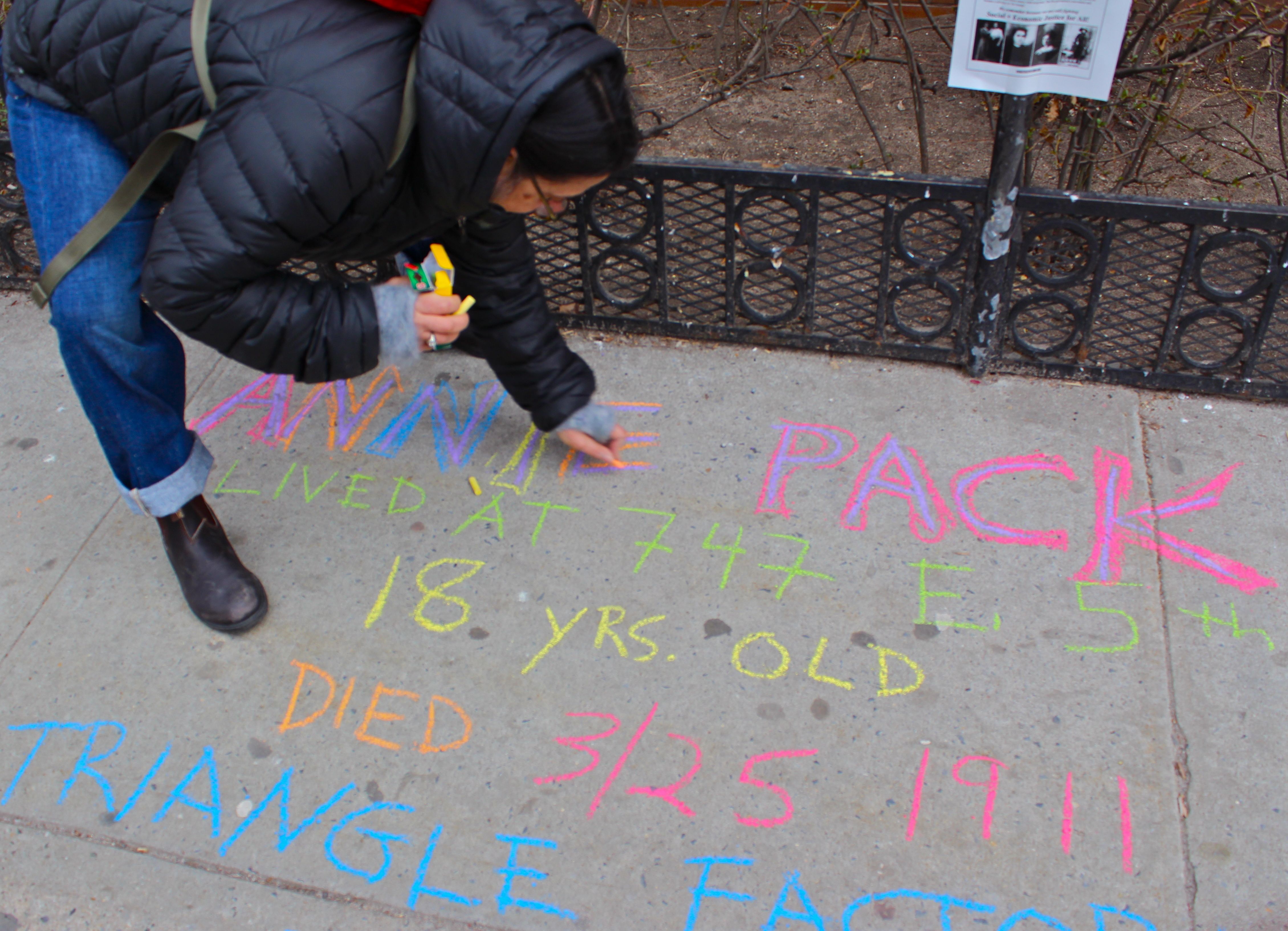
Rita and I began by chalking memorials for three young women who’d lived on East 5th Street. We were silent as we worked, smearing the chalk on the sidewalk. None of the buildings where these girls lived remained, but their addresses did. We chalked their names exactly where their homes stood once long ago. We wondered if they were friends and had walked to work together. They lived so close to each other and they were the only three on that block.
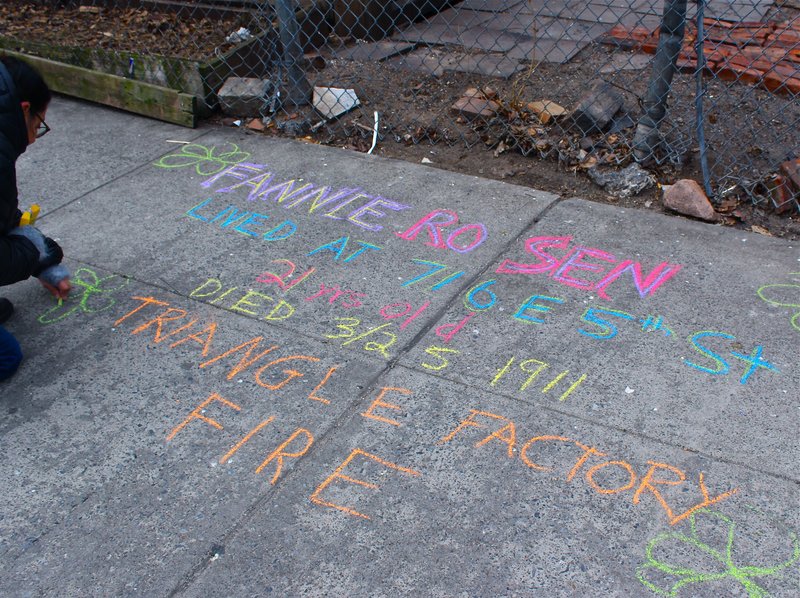
Fannie Rosen, 21 years old. Born in Russia, had lived in the US for 6 months
Fannie Rosen, 21 years old. Born in Russia, had lived in the US for 6 months

Violet or Velye, born in Russia, 21 years old. 9 years in the US. Union member
Violet or Velye, Schochet, born in Russia, 21 years old. 9 years in the US. Union member

Annie Pack, born in Austria. 18 years old. Lived in the US for 6 years. Union member.

Annie Pack, born in Austria. 18 years old. Lived in the US for 6 years. Union member.

Our last stop was the former home of Necha Dryansky, Rita’s great aunt. Necha lived at 104 Monroe Street. It was hard to find because that address no longer existed. The last number of Monroe Street that Rita and I found was No. 73. Then it turned into a pedestrian walkway for a housing project. There was a beautiful view of the East River. We could see glints of gold morning sunlight in the grey water. We remarked how in the early 1900’s, this place was full of tenement buildings and that people swam in the East River in the summer.
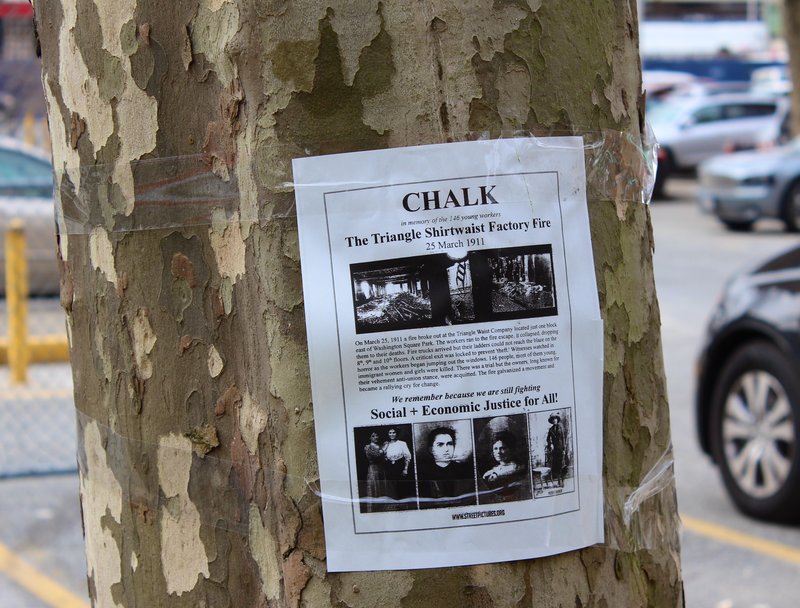
chalkmemorialtrianglefactoryfireflyerR Rita chalked the memorial to her great-aunt and I feel privileged to have helped a little bit with outlining in contrast colors.
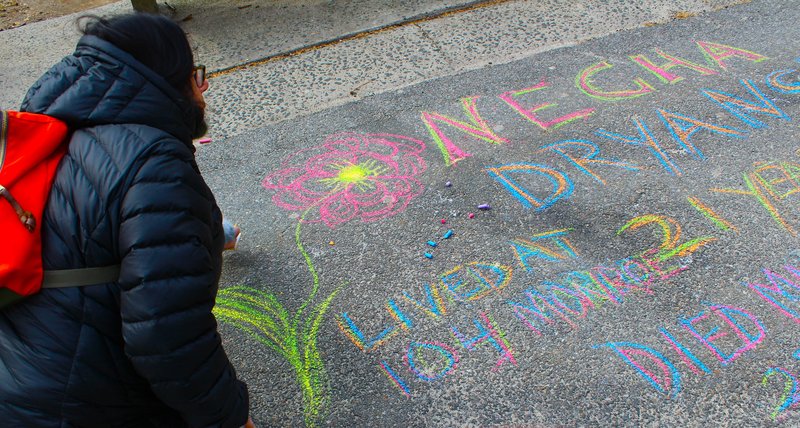
Rita Bobry chalking a memorial for her great-aunt Necha
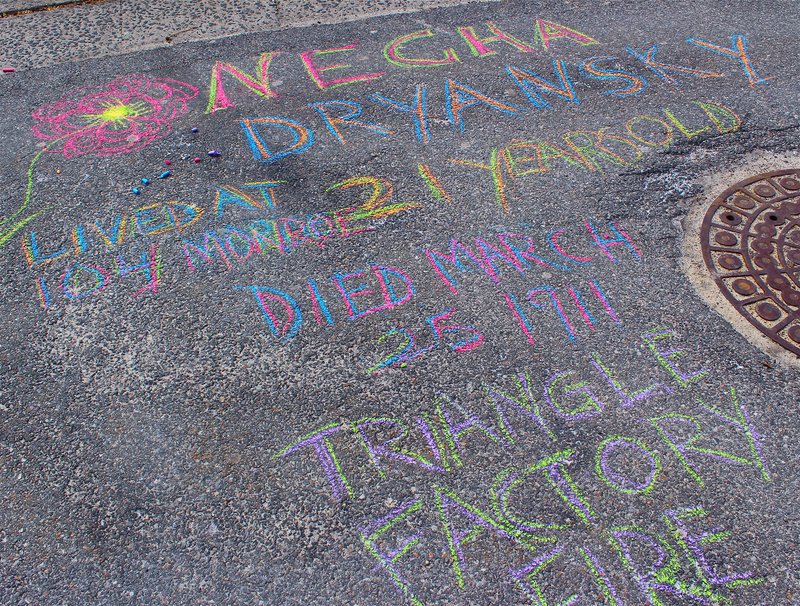
Rita Bobry chalking a memorial for her great-aunt Necha

nechadryanskychalkmemorial2014R

My post from last year’s Triangle Factory Fire Chalk Project is here.

the back bedroom

The back bedroom has always been the children’s room. When our building got its certificate of occupancy and we were cleared to move in, Camelia was a toddler. I’d just learned how to do stucco veneziano (venetian plaster) and the room was one of my first projects in the apartment. The first color for Camelia’s brand new bedroom was a beautiful peachy pink, very soft and not all at sugary. A perfect color for a little girl. The walls gave off a rosy light at night. In the morning, the room glowed golden from the sunlight coming in from the eastern facing window.

When we were homesteading our building in the 1980’s, there was a lot of drug dealing in the neighborhood (see my Pigeon Wars post for the backstory). Junkies broke into the squatter’s buildings and stole tools and pipes and anything that they could rip out to sell. It was near impossible to completely fortify the entire building against theft, there were too many spots where crumbling brick or boards could be pried loose. All you could do was to make it harder for them. During that time, the back bedroom became our tool room. We framed it out and created temporary walls of double thick plywood. The door was locked with a fat metal chain. That was the secure room, the place where we kept anything the junkies might want to walk off with.

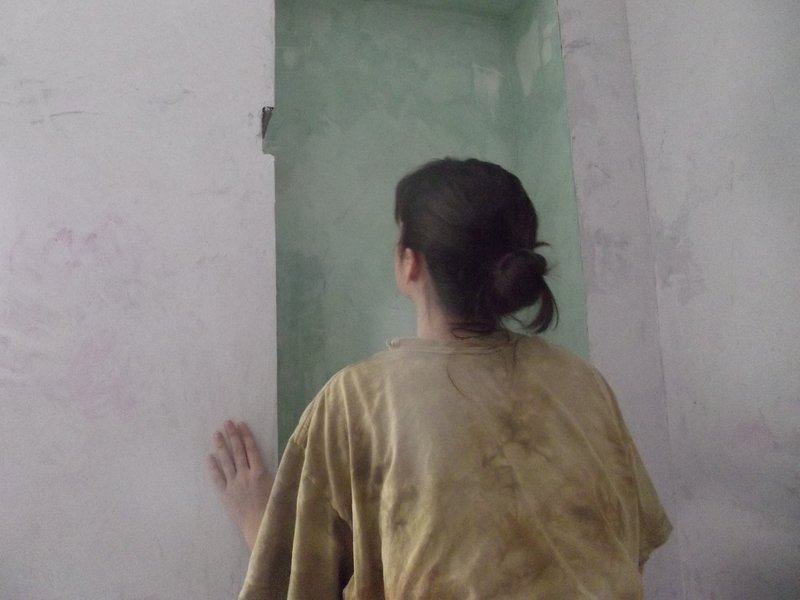
Homesteader Jay Goodson at the tool room which became our back bedroom

Homesteader Jay Goodson at the tool room which became our back bedroom

The room grew up with the girls. After the babyish pink came a sophisticated light royal blue when the girls were in  elementary school. Then came a rich green right before Camelia left for college. Now, at the time of Oona’s going to college, I decided to re-do the stucco in a pale greyish lavender. Oona said “Mom, you always want to re-do the room when we are leaving for college”. Maybe it is my way of trying to entice them to stay home.

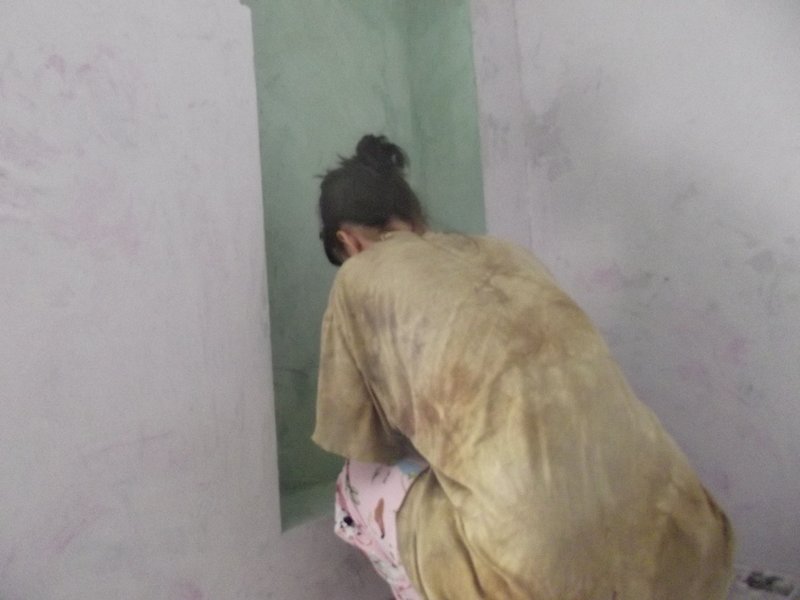
Oona applying stucco veneziano

Oona applying stucco veneziano

The old green being covered

The old green being covered

StuccoVeneziano3

This is a work-in-progress, stay tuned for updates.

lampost art

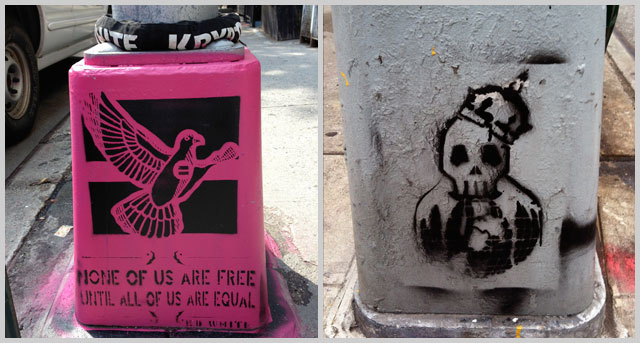
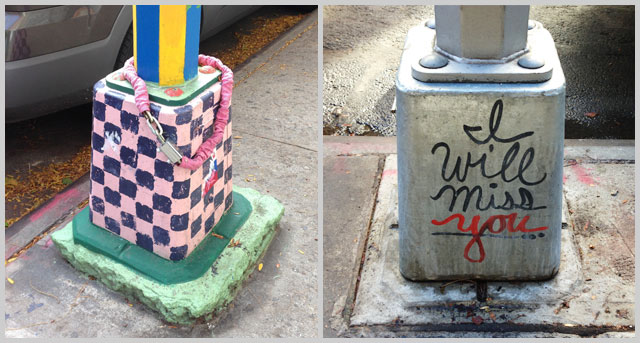
The snow has finally melted away uncovering the sidewalks and revealing things. I’ve always found it curious that people like to use the bases of lamposts as a canvas. In our neighborhood, it is a common sight to see embellished lamposts.

lampost_art_3

I liked that the bike chain left on the post was covered in pink velvet

I liked that the bike chain left on the post was covered in pink velvet

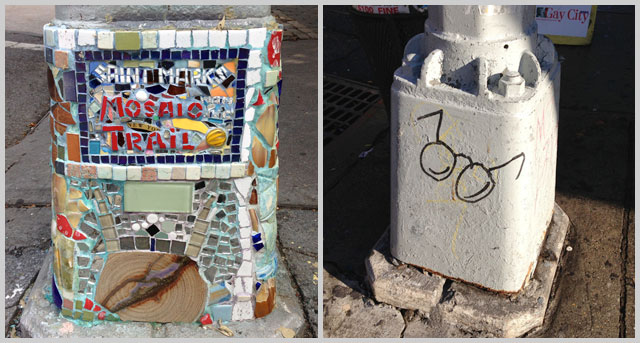
Elaborate lampost art on the Mosaic Trail on the left. And a whimsical Harry Potter tag on the right

Elaborate lampost art on the Mosaic Trail on the left. And a whimsical Harry Potter tag on the right

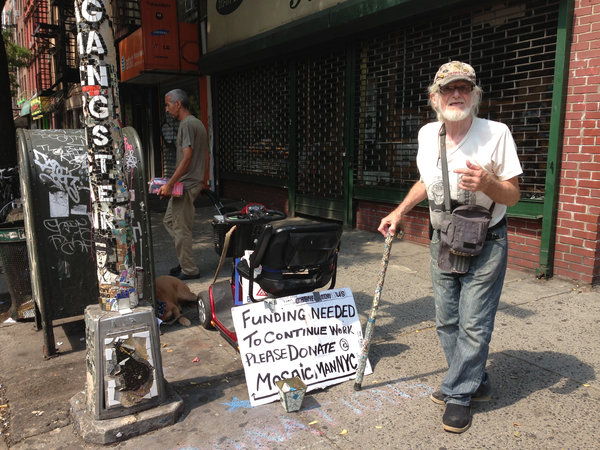
The master of the adorned lampost is Jim Power, aka, the Mosaic Man. Jim is a neighborhood artist that has been working in the community for decades. You can learn about him and support his on-going project by going to The Mosaic Man – Jim Power and his Mosaic Trail.

I ran into Jim last summer while he was out working on the Mosaic Trail

I ran into Jim last summer while he was out working on the Mosaic Trail